Proper meat storage is essential for maintaining freshness, flavor, texture, and food safety. Whether you are storing premium steaks, ground beef, poultry, or cured meats, using the right techniques can significantly extend shelf life and preserve quality.
At Steak & Foods, we believe that great meals begin with properly handled ingredients. These simple storage principles will help you keep your meat fresher for longer while protecting its natural taste and texture.
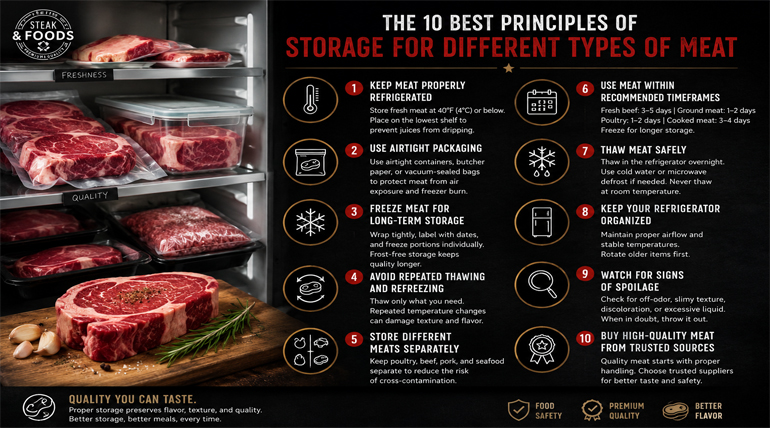
1. Keep Meat Properly Refrigerated
Fresh meat should always be stored at a temperature below 40°F (4°C). Consistent refrigeration slows bacterial growth and helps preserve freshness.
Place meat on the lowest shelf of the refrigerator to prevent juices from dripping onto other foods.
2. Use Airtight Packaging
Exposure to air can quickly reduce meat quality and cause freezer burn. Store meat in airtight containers, butcher paper, or vacuum-sealed packaging whenever possible.
Proper packaging helps maintain moisture and flavor.
3. Freeze Meat for Long-Term Storage
If you do not plan to cook meat within a few days, freezing is the best option.
For best results:
- Wrap tightly to avoid air exposure
- Label packages with dates
- Freeze portions individually for convenience
Properly frozen meat can maintain excellent quality for several months.
4. Avoid Repeated Thawing and Refreezing
Repeated temperature changes damage texture and increase moisture loss.
Instead:
- thaw only what you plan to use
- keep frozen portions separated
- refrigerate leftovers immediately
This helps preserve tenderness and flavor.
5. Store Different Meats Separately
Raw poultry, beef, pork, and seafood should always be stored separately to reduce cross-contamination risks.
Use separate containers or sealed packaging to maintain food safety standards.
6. Use Meat Within Recommended Timeframes
Even high-quality meat has a limited refrigerated shelf life.
General guidelines:
- Fresh beef: 3–5 days
- Ground meat: 1–2 days
- Poultry: 1–2 days
- Cooked meat: 3–4 days
Freezing extends storage time significantly.
7. Thaw Meat Safely
The safest way to thaw meat is inside the refrigerator overnight.
Avoid thawing meat at room temperature, as this can encourage bacterial growth.
For faster thawing, use cold water or microwave defrost settings when necessary.
8. Keep Your Refrigerator Organized
Avoid overcrowding the refrigerator to maintain proper airflow and stable temperatures.
Good organization also helps you rotate older products first and reduce food waste.
9. Watch for Signs of Spoilage
Always inspect meat before cooking.
Signs of spoilage may include:
- unpleasant odor
- slimy texture
- discoloration
- excessive liquid buildup
When in doubt, it is safer to discard questionable products.
10. Buy High-Quality Meat from Trusted Sources
Proper storage begins with quality products. Fresh, professionally handled meat maintains better texture, flavor, and shelf life from the start.
Choosing premium meat from trusted suppliers ensures a better cooking and dining experience every time.
Final Thoughts
Learning how to store meat correctly helps preserve flavor, reduce waste, and improve food safety in your kitchen.
With the right techniques, you can enjoy premium-quality meat longer while protecting the freshness and taste that make every meal exceptional.



Neque Porro Est Qui Dolorem Ipsum Quia Quaed Inventor Veritatis Et Quasi Architecto Beatae Vitae Dicta Sunt Explicabo. Aelltes Port Lacus Quis Enim Var Sed Efficitur Turpis Gilla Sed Sit Amet Finibus Eros. Lorem Ipsum Is Simply Dummy
Neque Porro Est Qui Dolorem Ipsum Quia Quaed Inventor Veritatis Et Quasi Architecto Beatae Vitae Dicta Sunt Explicabo. Aelltes Port Lacus Quis Enim Var Sed Efficitur Turpis Gilla Sed Sit Amet Finibus Eros. Lorem Ipsum Is Simply Dummy