
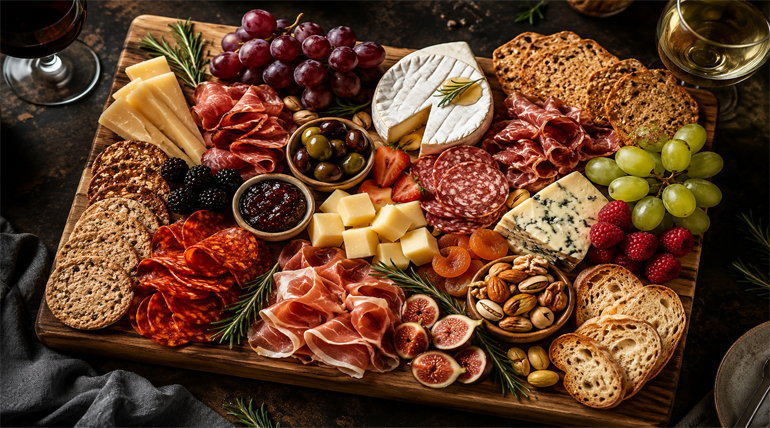
Creating a charcuterie board is one of the easiest ways to impress guests while serving a beautiful and delicious appetizer. A well-designed board combines a variety of meats, cheeses, fruits, crackers, nuts, and spreads to create the perfect balance of flavors, textures, and colors.
Whether you’re preparing for a dinner party, holiday gathering, wine night, or casual family event, a charcuterie board can instantly elevate the experience.
Start with the Right Board
The foundation of any great charcuterie platter is the board itself. Wooden serving boards, marble trays, or slate platters all work beautifully. Choose a size based on the number of guests and leave enough room to create a full and abundant presentation.
A large board also allows you to layer ingredients naturally for a more elegant look.
Choose a Variety of Meats
A good charcuterie board should include a mix of flavors and textures. Popular cured meats include:
- Prosciutto
- Salami
- Soppressata
- Chorizo
- Capicola
Try folding or rolling the meats instead of laying them flat. This creates volume and gives the platter a more professional appearance.
Select 3–5 Types of Cheese
Cheese adds richness and contrast to the board. For the best variety, combine different textures and milk types.
Consider including:
- A soft cheese like Brie or Camembert
- A hard cheese like Parmesan or Manchego
- A semi-soft cheese like Gouda
- A blue cheese for bold flavor
Pre-slice some cheeses while leaving others whole for visual balance.
Add Crackers, Bread, and Crunch
Arrange crackers and sliced baguette around the meats and cheeses to make the board easy to enjoy.
You can also include:
- Breadsticks
- Pretzels
- Artisan crisps
- Toasted crostini
The goal is to provide multiple textures throughout the platter.
Include Fruits and Fresh Elements
Fresh ingredients bring color and freshness to the board. Grapes, strawberries, blackberries, figs, apples, and pears pair perfectly with cheese and cured meats.
Dried fruits like apricots or dates also add sweetness and texture.
Fresh herbs such as rosemary or thyme can be used as garnish for a more elegant presentation.
Add Nuts, Jams, and Extras
Small details make a charcuterie board feel complete.
Popular additions include:
- Mixed nuts
- Honey
- Fig jam
- Olives
- Pickles
- Dark chocolate
These ingredients help create contrast between salty, sweet, savory, and crunchy flavors.
Arrange Everything for Visual Balance
The secret to a beautiful charcuterie board is filling empty space naturally. Start with the cheeses first, then place meats around them, followed by crackers, fruits, and smaller items.
Avoid symmetry — the best boards look abundant, organic, and “perfectly imperfect.”
Final Tips for the Perfect Charcuterie Board
- Use small bowls for jams and olives
- Serve at room temperature for better flavor
- Combine colors and textures evenly
- Prepare the board 30–60 minutes before serving
A thoughtfully prepared charcuterie board is more than just food — it becomes the centerpiece of the table and a memorable part of the gathering.



Neque Porro Est Qui Dolorem Ipsum Quia Quaed Inventor Veritatis Et Quasi Architecto Beatae Vitae Dicta Sunt Explicabo. Aelltes Port Lacus Quis Enim Var Sed Efficitur Turpis Gilla Sed Sit Amet Finibus Eros. Lorem Ipsum Is Simply Dummy
Neque Porro Est Qui Dolorem Ipsum Quia Quaed Inventor Veritatis Et Quasi Architecto Beatae Vitae Dicta Sunt Explicabo. Aelltes Port Lacus Quis Enim Var Sed Efficitur Turpis Gilla Sed Sit Amet Finibus Eros. Lorem Ipsum Is Simply Dummy